I wrote about truth, probability, and models of the Universe for the Institute of Art and Ideas. Is a more accurate theory really closer to the truth, or just a better map?
Month: November 2026
In my head, “this century” still starts in 1900.
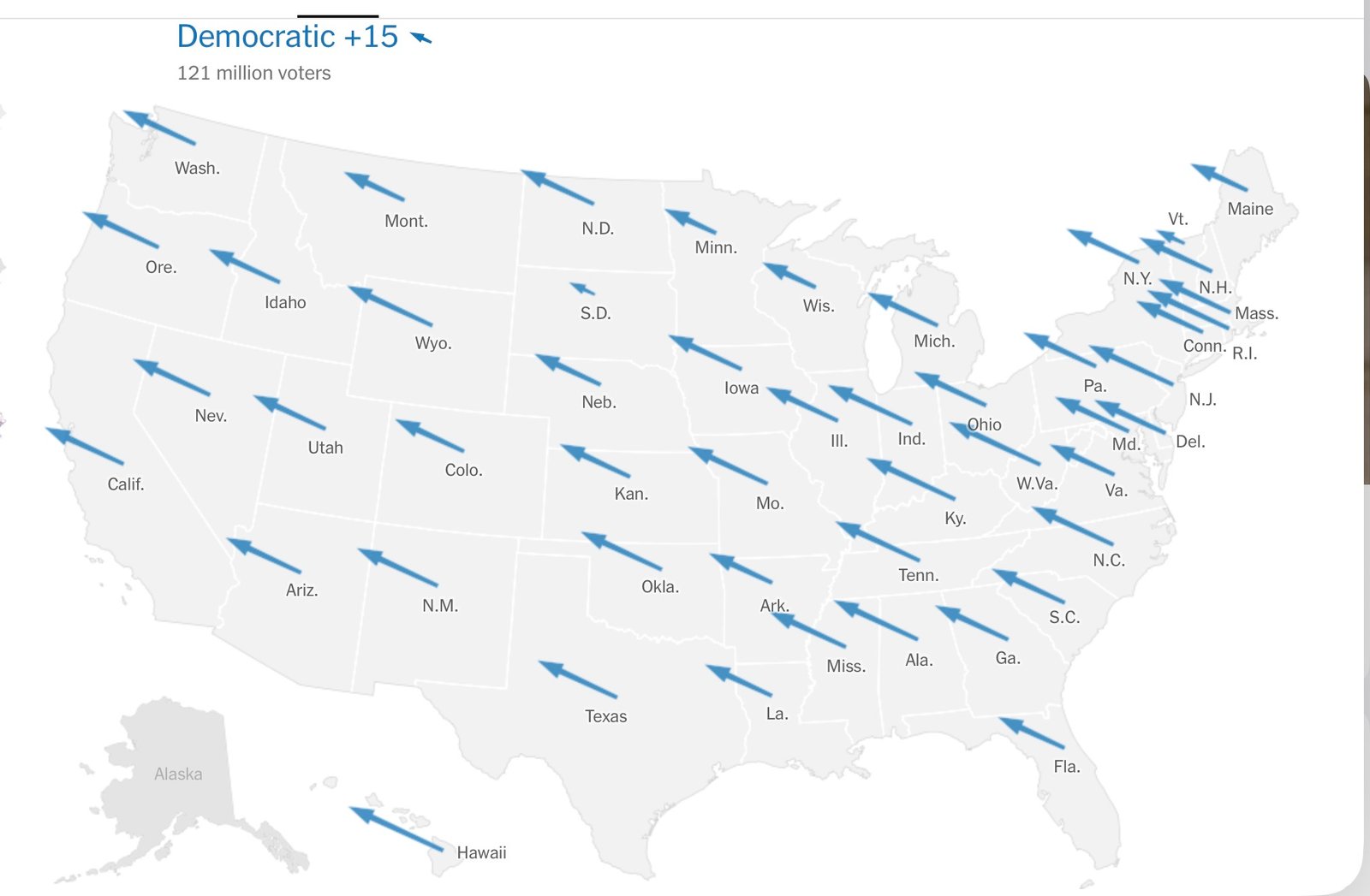
Democrats Clinch 258 House Seats, an Election-Year Record This Century
I am very annoyed that ESA has changed its website and killed old links like this one which used to point to a Planck Satellite page. (Apologies to anyone reading old pages on my blog with out-of-date links…)
SW London/Kingston friends: I’ll be speaking about The Random Universe at the New Malden Library on Thursday, 3 December, at 4:30pm. Cosmology, philosophy, coffee, tea, and books!
What’s amazing is not how much training an LLM requires, but how little humans do. And how much they are training themselves, like a baby babbling to herself until it comes out as English (or a mathematical proof).
Some news: I’ll be speaking at SXSW 2027 in Austin (15–21 March), in the Tech & AI programme.
“How Do We Know What We Know About the Universe & the World?”
Ever since Thomas Bayes, we’ve known we can never be completely certain of anything, but probability gives us the tools to learn from experience anyway. That’s true of our grandest theories of the cosmos, and of our everyday beliefs. The talk draws on my book, The Random Universe.
If you’ll be in Austin, come along and ask questions!
New post: South-by
A mighty wind.
Ended my 15-lecture Information Theory course for upper-level physics undergraduates by applying it to large language models. Basically: entropy, compression, typicality, and why “Claude” is called “Claude”. (Made in collaboration with the eponymous LLM.)
When the LLM responds with “For an astrophysicist audience, I’ve often found the most intuitive summary is…”, who is this “I”?